Hi!
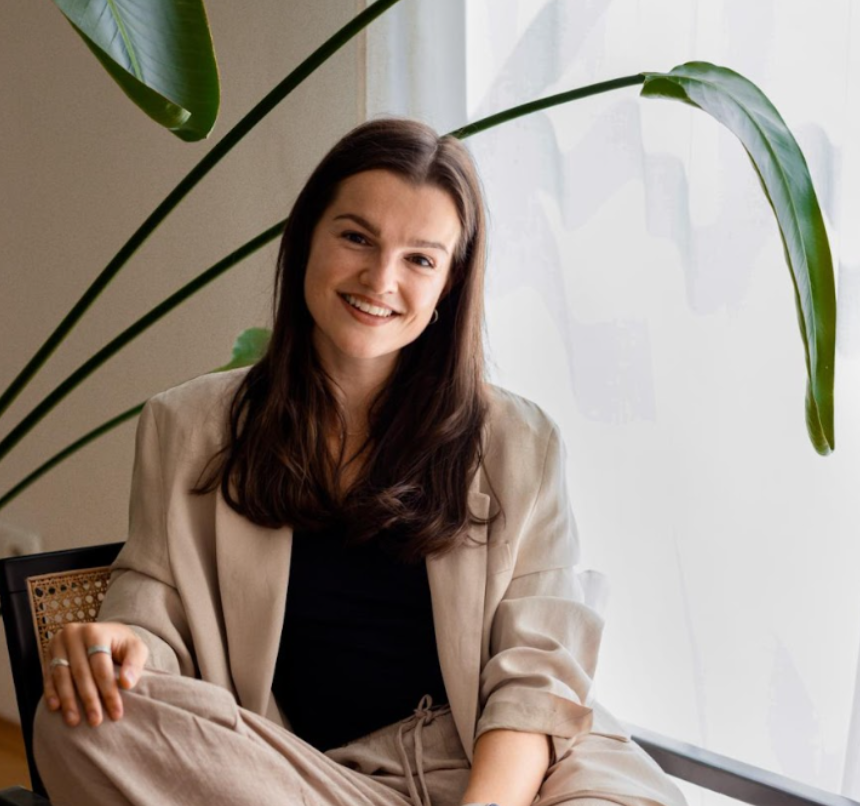
I am an interior architect based in Prague and Lucerne. As a WELL AP and BREEAM Associate, I focus on integrating environmental health into design. In much of contemporary interior practice, priority is still placed primarily on aesthetics, often with less attention to how environments interact with the body. My work is driven by a different question: how can spaces work with us, rather than against us?
My interest in this field began on a personal level. Working in London, a high-pressure, performance-driven environment made me acutely aware of how strongly surroundings influence focus, stress levels and recovery, feeling of safety. Later, spending time in Australia highlighted the contrast between intensity and balance. It became clear that space is not neutral. It either supports us or it adds to our load.
We live in an increasingly overstimulating world, surrounded by constant visual, acoustic, and cognitive input. In this context, the spaces where we spend most of our time — our homes, workplaces, and social environments — should actively support our biological systems rather than contribute further stress.
Through this work, I came to see wellbeing through a long-term lens. The environments we spend most of our lives in quietly shape our physical and mental health over time through repeated exposure to light, sound, air quality, ergonomics, and sensory load. Designing for longevity means reducing chronic stressors and supporting the body’s ability to recover, focus, and age well.
If you are looking for design that is thoughtful, practical, and grounded in evidence, you are in the right place.




Affiliations
Member of CZGBC (Czech Green Building Council), Working Group on Healthy Indoor Environments
Member of FLIRE (Female Leaders in Real Estate); presented at member events
Philosophy.
Interiors are biological environments.
Environmental conditions → Nervous system response → Performance and recovery → Long-term health
Light: influences circadian rhythm and hormone balance.
Air quality: affects cognitive clarity and inflammation.
Noise: activates stress pathways.
Thermal instability: disrupts recovery.
Visual and sensory overload: increase cognitive fatigue.
These inputs are constant. Over time, they either support resilience or contribute to chronic stress.
Wellbeing in design is not about trends or decoration. It is about reducing unnecessary environmental load and creating spaces that support the body’s ability to regulate, recover, and perform.
Every project begins with defining user profiles. There is no universal wellbeing solution. Different bodies, gender, routines, and sensitivities require different spatial responses.
I assess environmental stressors aligned with my Wellbeing Matrix across core domains:
Light & Circadian Health – daylight strategy and glare control
Air & Ventilation – air quality and pollutant reduction
Thermal Comfort – stability and physiological regulation
Acoustics – noise management and sound privacy
Materials – chemical load and sensory impact
Movement & Ergonomics – posture and spatial flow
Sensory Balance – cognitive load and overstimulation
Each stressor is evaluated in relation to exposure, user sensitivity, and realistic control strategies.
My work draws from the WELL Building Standard, BREEAM, WHO Healthy Housing Guidelines, Harvard Healthy Buildings research, and environmental health literature. Biophilic principles and spatial coherence frameworks, including Feng Shui, are applied where they reinforce measurable outcomes such as improved daylight, clarity of flow, and reduced sensory strain.
The objective is simple:
Reduce environmental stressors.
Support long-term biological resilience.
Design spaces that work with the body, not against it.
My Approach.
